
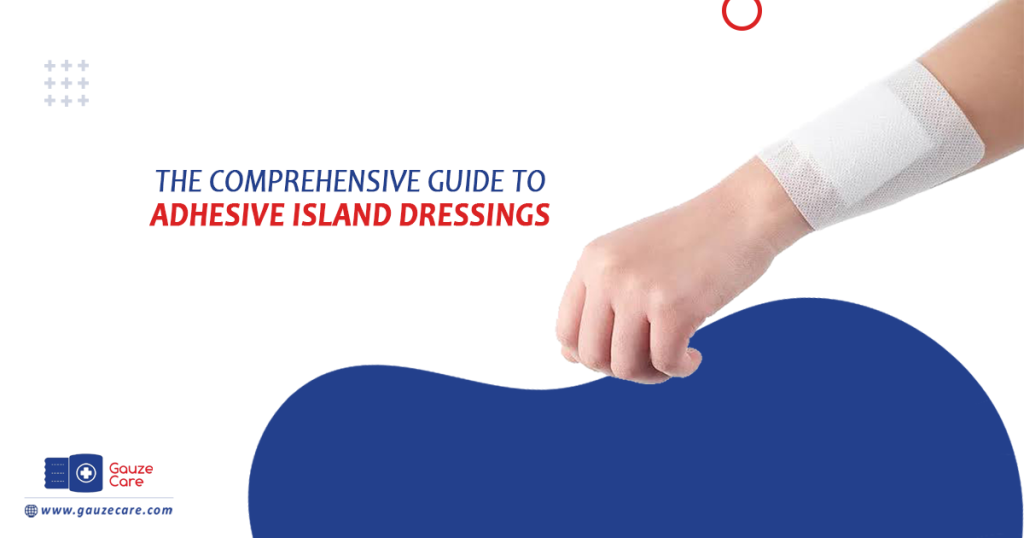
For the management of basic surgical incisions, superficial cuts, or abrasions, a dressing that is straightforward, protective, and secure is required. Adhesive island wound dressings, often called island bandages, are among the most prevalent and effective dressings found in healthcare settings and home first-aid kits. An adhesive island dressing consists of a central absorbent pad situated within a wide adhesive border that surrounds the pad, representing a complete dressing option for covering a wound. This guide will go over the construction, advantages, and application of the various uses of adhesive dressings.
What Constitutes an Island Dressing Medical?
The term “island dressing“ describes the design; the central absorbent pad sits like an island in the middle of the adhesive border.
Structure and Composition
An effective island dressing wound dressing is made up of three components:
- Non-Adherent Contact Layer: The portion of the dressing that contacts the wound has been designed not to stick to the healing tissue and, therefore, will not cause more pain or damage upon removal.
- Center Absorbent Pad: This is the central “island”. It’s made with soft and very absorptive material (typically cotton or rayon) intended to hold light to moderate levels of exudate.
- Outer Adhesive Border: The sizeable adhesive perimeter of the wound dressing, often made from flexible non-woven fabric or film, secures the dressing and creates a protective seal.
The basic design of the bandage makes it an adhesive medical dressing for almost everyone.
Main Advantages and Uses
The multi-functional, bordered gauze with adhesive border has several benefits over traditional gauze and tape.
Enhanced Protection and Security
The adhesive periphery creates an excellent seal that fully isolates the wound from the surrounding environment. This ultimately prevents bacteria from entering and reduces the risk of infection. The adhesive is also very strong, so the dressing will stay in place even on mobile and frequently handled areas.
Optimal for Post-operative Care
Adhesive island dressings are the standard way to dress clean surgical incisions. These are commonly called “island dressing surgical” because they:
- Cover the entire incision without gaps.
- Absorb any minimal weeping or bleeding, which is relatively common in the first few days after surgery.
- Prevent accidental rubbing or bumping against the fresh suture line.
Comfortable and Conformable
Usually, what are called island dressings are made with soft and pliable backing material that fits easily to body contours, such as joints, elbows, and knees, which helps with comfort when moving.
How Long Should You Keep An Adhesive Island Dressing?
The length of time an adhesive island wound dressing can stay on your skin is contingent on a variety of factors, but adhesive island wound dressings are usually intended to remain in place for an extended period of time.
Timing to Change the Dressing
- Saturation: The dressing needs to be changed if the center pad becomes the entire saturated with fluid or blood.
- Lift/Compromise: Replace the dressing if the adhesive border starts to lift, peel, or break its seal in order to prevent contamination.
- Routine Protocol: Generally, if the injury is clean and not draining, most adhesive wound dressing products are appropriate for up to 3 to 5 days if they remain clean, dry, and secured in place, and manufacturer’s or health care professional recommendations are followed.
Consideration for Your Island Dressing Change
The correct application and removal of all adhesive dressings is essential in maintaining the wound environment and protecting the surrounding skin.
Steps to Apply
- Clear & Dry: You should clear with saline or a gentle cleanser. Make sure the surrounding skin is fully dry – this is very important. If the surrounding skin is wet, the adhesive on your wound dressing will not adhere.
- Choose Appropriate Size: Pick a dressing size such that the absorbent pad completely covers the wound and the adhesive border rests completely on clean, healthy skin.
- Position and Spread: Remove the backing paper and center the pad directly over the wound. Gently smooth down onto the skin from the center out to remove any wrinkles or air pockets.
Changing the Dressing of the Removal and Island
- How Often: The frequency of change is usually determined by the degree of drainage or if the central pad is filled or the adhesive border begins to peel. Most adhesive wound dressing products can remain for 3-5 days if kept clean and dry.
- Technique: To avoid damaging the skin, peel the adhesive border back slowly and peeling it in a parallel motion (the “low and slow” technique) instead of ripping it upwards.
Summary
The adhesive island wound dressings are an essential part of healthcare for the treatment of clean, sutured, or mildly draining wounds. The all-in-one solution – a non-adhering pad and reliable adhesive – provides excellent protection, comfort, and ease of use. Knowing how an island dressing is applied will promote appropriate healing while preventing any unnecessary trauma during the island dressing change.
FAQ
Can I wet this dressing?
Most current island dressings have backing that is water-resistant or waterproof. However, avoid submerging for extended periods, which can cause the adhesive border to lift and break the sterile barrier.
In what ways are island dressings different from regular bandages?
An island bandage is typically larger in size, and it features a much wider, conformable adhesive border, making this type of dressing advantageous for larger surgical sites, or for injuries that require the highest integrity of seal.
When should I pick an island dressing instead of gauze?
Pick this adhesive medical dressing when you need a secure, all-in-one, waterproof, or highly protective cover without needing tape and gauze pads separately.
Should the adhesive border touch the wound?
No. The border of the adhesive wound dressing should only touch the healthy skin surrounding the wound. The only part that should be directly on the wound itself is the non-adherent center section of the pad.