
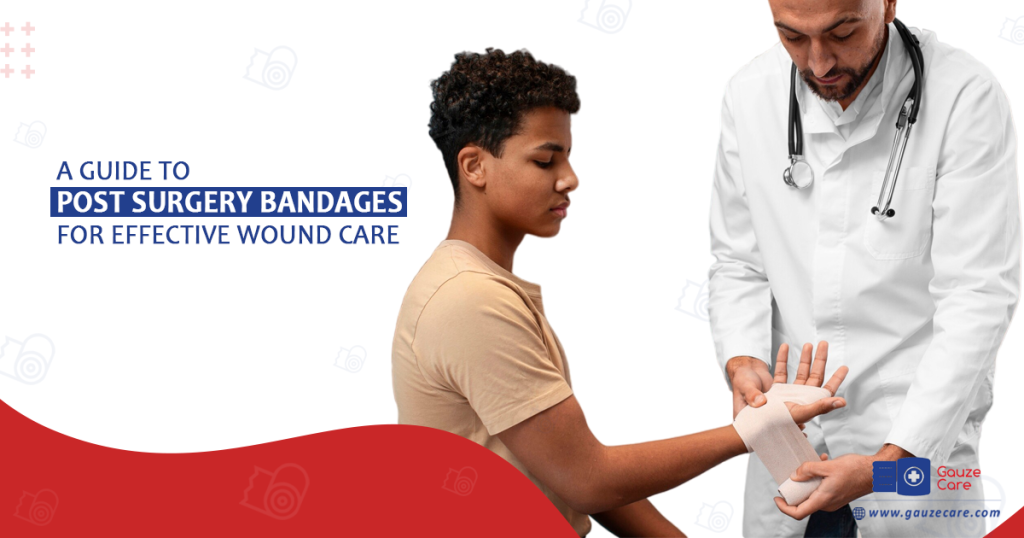
As soon as the surgical process has ended, the attention shifts to recovery, and the first line of defense is the dressing. Post surgery bandages are not just protective coverings – they are advanced medical devices that manage fluid, inhibit the development of infection, and create a favorable healing environment for the surgical wound. It is important for patients and caregivers managing a recovery at home to understand the various models of bandages and they are purpose and role in recovery.
The Purpose of Dressings After Surgery
A surgical bandage has several important purposes in the early stages of healing:
- Infection Prevention: The first purpose is to provide a sterile barrier to the incision and to protect it from bacteria, dirt, and moisture in the environment.
- Management of exudate: Bandages will absorb the drainage (serous fluid, blood) that is common after surgery to avoid maceration (softening of the skin) and promote a clean area.
- Physical protection: They provide cushioning of the wound against bumps, friction, and pressure. This is especially important in areas that are under clothing or at pressure points.
Common Types of Post Surgical Bandages
Coverings depend on the procedure and/or type of incision. The main categories of dressings are absorbent pads, adhesive dressings, and specialty bandages.
Absorbent Surgical Dressings
These are also used immediately following a case, when drainage is at its greatest.
- Gauze Surgical: Sterile gauze surgical pads are the same for everyone – they are absorbent and can often be used in layers to be a primary or secondary dressing.
- Abdominal Pads: These are large, thick, multi-layer dressings designed for incisions that produce abundant drainage and have an effective capacity for allowing management of absorptive fluids.
All-inclusive adhesive dressings
These dressing types have combined a pad with an adhesive border for both convenience and security.
- Post Operative Adhesive Sterile Dressing: This is the most common dressing for home care. It has a non-adhering pad with a flexible, self-adhering backing. The pad keeps the incision sealed without the need for tape.
- Surgical Island Dressing: Also referred to as an island surgical dressing, they are basically island dressings that are sterilized and sized for post-operative use, and they form a barrier to seal the suture line.
Specialty Bandages
These only solve mechanical problems that are more complicated than basic absorption.
- Pressure Dressing after Surgery: A pressure dressing post-surgery will use firm compression (usually with elastic wraps) over a thick pad to minimize swelling, limit fluid collecting, and reduce the chances of blood collection (hematoma forming).
When to Change Post-Op Dressings
It is important to know when to change a post-surgery dressing in order to prevent any issues.
| Day/Condition | Action |
Type of Dressing |
| First 24-48 Hours | Do NOT change unless explicitly instructed by the surgeon. | Initial heavy surgical pads dressings must remain in place to stabilize the site. |
| Saturation | Change immediately if the dressing becomes soaked or the seal breaks. | Use a clean, sterile replacement, often a post surgical adhesive sterile dressing. |
| After 48 Hours | Change once daily or every 2 days, checking the incision site carefully. | Use clean gauze surgical pads or an island surgical dressing. |
| Final Stage | Once the incision is dry and closed, move to a simple cover or silicone sheeting. | Simple bandage surgery or no dressing at all. |
Dressing a Post Surgical Bandage: Care and Application
Using proper technique in handling and applying bandages after surgery is important to keep the incision sterile.
Essential Application Steps
Hand washing: Be sure to wash your hands well for 20 seconds before you touch the incision or new dressing. If you have them, put on clean gloves.
Removal: Carefully peel back the old surgical bandage, observe the incision and used pad for signs of infection (i.e., increased redness, odor, thick yellow/green discharge.
Cleansing: Clean the wound with saline or as per the surgeon’s advice. Take care to clean away from the incision line so you don’t push bacteria into the wound. Pat the surrounding skin dry.
Application: Apply the Atraumatic post-surgical adhesive sterile dressing over clean, dry intact skin with a nonmoldable absorbent pad covering the incision and 100% of adhesive contacting skin.
Recognizing Complications:
Though some redness and swelling are to be expected, if you see the following, seek out a doctor right away:
- Fever: A fever of at least 101°F (38.3°C).
- Terrible Pain: One that gets worse quickly or is not relieved by pain medicine.
- Pus/Drainage: Thick green or smelly discharge.
- Redness That’s More Than Expected: Redness that extends far beyond the wound area.
Summary
Choosing and applying a post-surgery bandage is a key part of recovery. From excessive surgical pad dressings for high drainage to adhesive sterile dressings for coverage and convenience, each has its place. Adherence to the script for post-surgery bandaging supports the incision site being clean, protected, and in a position to heal effectively.
FAQ
When are you able to discontinue use of a bandage after surgery?
When the incision site is fully healed, dry, and no longer draining ( typically 7–10 days). Your doctor will let you know when it is safe to remove the dressing or switch to a scar treatment.
Can I shower with the post surgery bandages in place?
It happens to depend on the dressing. If you have a clear post-surgical adhesive and sterile dressing with waterproof film, good, quick showers are generally good. Do not allow the incision to become submerged in water (baths/swimming).
What is a pressure dressing for?
After surgery, a pressure wound dressing is applied; tight adherence of the surgical site to the bandages may reduce swelling, diminish hematoma/seromas, and prevent creases in the skin.
Is there a difference between island dressing and gauze surgical?
No, Gauze surgical needs to be secured with tape. An island dressing is an “all-in-one” dressing with a central pad (absorbent layer) attached to either a large adhesive border or to a support tape.