
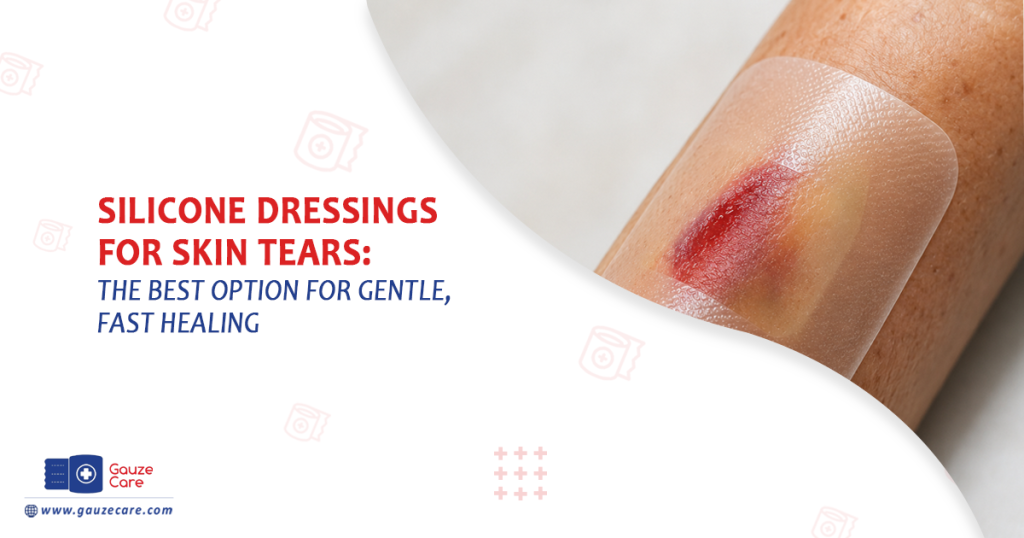
A skin tear can happen in seconds but take weeks to heal if it’s not cared for properly. Choosing the right silicone dressings for skin tears makes a real difference in comfort and recovery time. This guide covers skin tear types, how silicone dressings work, and how to pick the best option for your needs — including for elderly patients with fragile skin.
What Is a Skin Tear?
A skin tear is a wound caused by friction, shear, or blunt force that separates the skin’s layers. It’s different from a cut or laceration wounds because the skin often peels back rather than being sliced. Skin tears are especially common in older adults, since skin naturally thins and loses elasticity and collagen with age, making it far more prone to tearing from everyday contact. Even minor bumps against furniture or improper medical tape removal can cause one.
Common Skin Tear Types
Understanding skin tear types helps you choose the right dressing and treatment approach. Clinicians generally classify skin tears using the ISTAP (International Skin Tear Advisory Panel) system, based on how much skin flap tissue remains.
- No skin loss: The skin flap can be reposition to cover the wound.
- Partial flap loss: The flap can’t fully cover the wound bed.
- Total flap loss: The wound bed is fully exposed.
Each category heals differently, but all benefit from a dressing that protects the area without disturbing new tissue.
Why a Silicone Dressing for Wounds Works So Well
A silicone dressing for wounds is widely used for skin tear because it’s gentle on fragile skin while still keeping the wound protected. Unlike standard adhesive bandages, silicone doesn’t bond aggressively to skin, so it won’t pull off healing tissue when removed.
Protective Layers Over Skin Wounds
Silicone dressings create soft protective layers over skin wounds, guarding them from friction and bacteria while maintaining a moist wound-healing environment. This barrier supports the body’s natural healing process while reducing the risk of further tearing.
Silicone Adhesive Dressing Benefits
A silicone adhesive dressing sticks well enough to stay in place during daily movement but allows for gentle removal with less trauma. This matters most for older patients, whose skin can tear again from a dressing that’s too sticky.
Types of Silicone Dressings for Skin Tears
Not all skin tears require the same type of silicone dressing. Thickness, absorbency, and flexibility all vary between products, so matching the dressing to the wound size and drainage level determines how well it performs.
Silicone Foam Dressing for Skin Tear
A silicone foam dressing for skin tear care is ideal for wounds with moderate drainage. The foam layer absorbs fluid while the silicone contact layer stays gentle against the skin. Foam dressings also cushion the area, which helps prevent bumps from reopening the wound.
Silicone Adhesive Film Dressing
Thinner silicone film dressings work well for shallow, low-drainage skin tears. Transparent silicone film dressings are flexible, allow the wound to be monitored without full removal, and fit easily over joints or curved areas like elbows and shins.
How to Dress a Skin Tear Step by Step
Knowing how to dress a skin tear correctly lowers infection risk and supports faster closure. Follow these steps for minor skin tears at home or in a care setting.
- Gently rinse the wound with clean saline or lukewarm water.
- Pat the surrounding skin dry — never rub the wound area.
- If a skin flap is present, carefully reposition it over the wound bed.
- Apply a wound dressing for skin tear care sized to fully cover the area with a small margin.
- Smooth the edges down without stretching the skin.
- Mark the dressing with the application date for easy tracking.
Choosing the right bandage for skin tears at this stage prevents unnecessary pain during future changes.
Choosing a Dressing for Skin Tears in Elderly Patients
Finding the best dressing for skin tear in elderly patients means balancing low-trauma removal with the wound’s size, drainage level, and overall healing needs. Aging skin has less collagen and a thinner protective layer, making it more prone to tearing again during dressing changes.
For most elderly patients, a soft silicone dressing for skin tears with a border is the safest choice. It stays secure during daily activity but won’t strip the skin when it’s time to change it. Caregivers should also avoid dressings with strong acrylic adhesives, which increase reinjury risk.
What Is the Fastest Way to Heal a Skin Tear?
The fastest way to heal a skin tear is to keep it clean, moist, and undisturbed. Moist wound healing environments close wounds faster than letting them dry out or scab over. Choosing the best dressing for skin tear care from the start avoids repeated trauma from switching dressings mid-healing.
Other factors that speed healing include good nutrition, adequate hydration, and protecting the area from further bumps or pressure.. Checking the wound regularly for signs of infection — such as increasing redness, swelling, warmth, or pus — also helps catch problems early.
How Long Can Silicone Dressing Stay on Skin Tear Wounds?
Most silicone dressings can stay in place for three to seven days, depending on drainage levels — always check the manufacturer guidance for the specific product, since wear times vary between foam and film formulations. Change the dressing sooner if it becomes saturated, loose, or shows signs of leakage.
Checking the dressing edges daily, without fully removing it, helps you judge whether it’s still doing its job. If the wound looks red, swollen, or has an unusual odor, change the dressing early and monitor for infection.
Conclusion
Skin tears heal when they’re protected by a gentle, breathable barrier. Silicone dressings for skin tears offer that balance — secure enough to stay put, gentle enough to remove without damage. Whether you choose a foam or film option, matching the dressing to the wound type and drainage level supports faster, more comfortable healing, particularly for elderly patients with fragile skin.
Frequently Asked Questions
Can silicone dressings be used on very fragile elderly skin?
Yes. Silicone dressings are specifically designed for fragile skin because they minimize adhesive trauma during removal, unlike standard adhesive bandages.
Do silicone dressings hurt when removed?
No. Silicone’s low-trauma adhesive releases cleanly from skin, making removal far less painful than traditional adhesive dressings.
Can you shower with a silicone dressing on?
Many silicone dressings are water-resistant, but check the product label. Pat the area dry afterward instead of rubbing it.
What’s the difference between silicone and hydrocolloid dressings for skin tears?
Hydrocolloid dressings form a gel as they absorb fluid and adhere more firmly, while silicone dressings are gentler and better suited for thin, fragile skin.
When should you see a doctor for a skin tear?
See a doctor if the wound is large, deep, won’t stop bleeding, or shows signs of infection like redness, warmth, or discharge.