
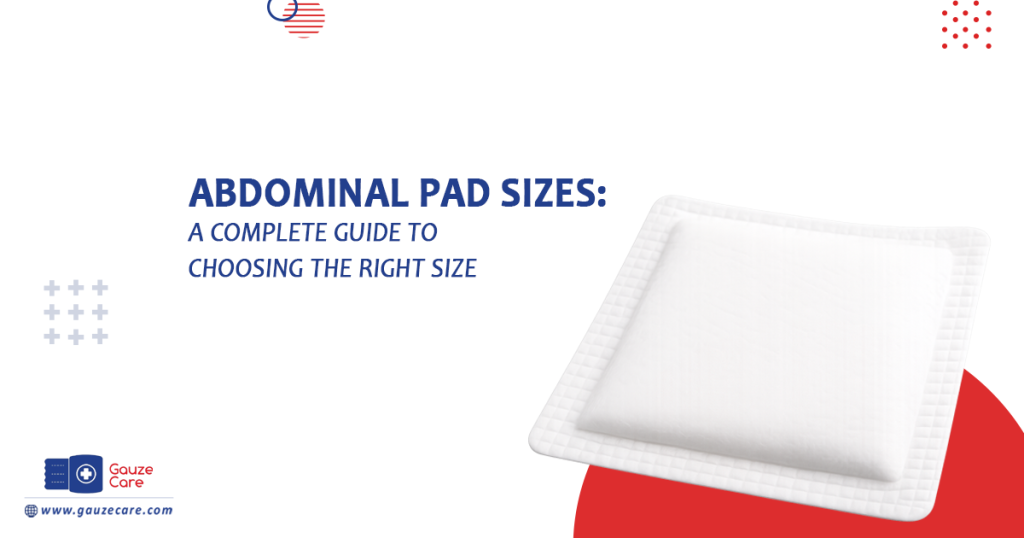
Selecting the correct abdominal pad sizes is more important than many people realize. The wrong size can leave a wound under-protected or result in unnecessary product waste. Whether you’re stocking a clinic, preparing a surgical tray, or building a home first-aid kit, understanding abdominal pad sizes helps you choose the right dressing for different wound types. This guide explains the most widely used sizes, their common applications, and how to select the best option. By the end, you’ll know which abdominal pad size suits your needs.
What Are Abdominal Pads?
Abdominal pads, often called ABD pads, are thick, absorbent dressings used to cover large wounds. They’re commonly placed over surgical incisions, deep cuts, or heavily draining wounds. Unlike thin gauze pads, abdominal absorbent pads are built with multiple layers to soak up fluid over several hours. Most feature a non-adherent inner layer so the pad doesn’t stick to the wound bed, plus an outer layer that holds everything together securely.
These pads are a staple in hospitals, surgical centers, and home care settings alike. Nurses, caregivers, and first responders rely on them whenever a standard bandage simply isn’t big enough for the job.
Common Abdominal Pad Sizes
Several widely used abdominal pad sizes are available to accommodate different wound sizes and drainage levels. Choosing the right size helps provide adequate coverage while improving patient comfort. Below are three of the most commonly used options.
5×9 Abdominal Pads
Abdominal pads 5×9 are the most widely stocked option. They strike a balance between coverage and flexibility, making them suitable for moderate-sized wounds on the torso, back, or limbs. Many brands also offer an extra absorbent abdominal pad 5×9 version, designed for wounds with heavier drainage that need longer wear time between changes.
7.5×8 Abdominal Pads
The abdominal pads 7.5 x 8 size is a common middle-ground choice. It offers slightly more surface coverage than the 5×9 while remaining easy to secure with standard tape or a wrap. This abdominal pad 7.5 x 8 option is frequently used as post-surgery dressings when the incision runs longer than a typical cut.
8×10 Abdominal Pads
Abdominal pads 8×10 are the largest of the common sizes. They’re built for major surgical incisions, large lacerations, or wounds with significant drainage. Because of their size, they’re often the go-to choice in operating rooms and emergency departments.
How to Choose the Right Abdominal Pad Size
Choosing between different abdominal pad sizes depends on three key factors: wound size, drainage level, and wound location.
A wound with heavy drainage requires a thicker, more absorbent pad regardless of its size. Longer surgical incisions often benefit from rectangular options such as the 7.5×8 or 8×10 sizes because they provide better overall coverage.
Also consider how the dressing will be secured. Larger pads usually require additional tape or a retention wrap, particularly over joints or curved body areas. When you’re unsure between two sizes, choosing slightly larger coverage is generally the better option. It is easier to secure extra coverage than a dressing that leaves part of the wound exposed.
Sterile vs Non-Sterile Abdominal Pads
Sterile abdominal pads are generally recommended for fresh surgical wounds, open incisions, and wounds with a higher risk of infection. Non-sterile pads, by contrast, are typically used for secondary dressing layers, padding, or general first-aid where the wound isn’t freshly opened.
Always check the packaging before use. A wound fresh from surgery should never be covered with a non-sterile pad, even temporarily, since this raises infection risk significantly.
|
Feature |
Sterile ABD Pads |
Non-Sterile ABD Pads |
| Individual Packaging |
Yes |
Usually No |
| Best For |
Surgical wounds |
Secondary dressings |
| Infection Risk |
Lower |
Not intended for fresh surgical wounds |
| Common Use |
Hospitals & post-op care |
Padding & general wound care |
Abdominal Pads Uses
Common abdominal pads uses include:
- Covering post-surgical incisions during recovery
- Managing drainage from deep cuts or lacerations
- Padding under compression wraps or splints
- Absorbing fluid from wound vacs or drains
- Providing cushioned protection over sensitive healing skin
Abdominal Gauze Pads, Dressing Pads, and Surgical Pads
The terms abdominal gauze pads, abdominal dressing pads, and abdominal surgical pads are often used interchangeably, but there are subtle differences. Gauze pads typically refer to the woven cotton material inside the pad. Dressing pads are a broader term covering any pad designed to sit directly over a wound. Surgical pads usually imply a sterile, operating-room-grade product built to a stricter manufacturing standard.
Rather than focusing on the product name, check the dressing’s size, absorbency, sterility, and intended use before selecting one.
Conclusion
Choosing the right abdominal pad size comes down to matching the pad to your wound size, drainage level, and sterility needs. The 5×9 works well for moderate wounds, the 7.5×8 suits longer incisions, and the 8×10 handles major surgical or high-drainage cases. Keeping a mix of sizes on hand, in both sterile and non-sterile options, ensures you’re prepared for whatever situation comes up.
Frequently Asked Questions
How often should an abdominal pad be changed?
Most pads should be changed once they become saturated or at least once daily, following your healthcare provider’s instructions.
Can abdominal pads be cut to size?
Sterile pads generally shouldn’t be cut, since this can compromise sterility and cause loose fibers to enter the wound. Choose a pre-sized pad instead.
Are abdominal pads the same as maxi pads?
No. While early designs shared some materials, medical abdominal pads are manufactured to sterile wound-care standards and are not interchangeable with feminine hygiene products.
Do abdominal pads need to be taped down or can they be held with a wrap?
Either method works. Tape is common for smaller areas, while an elastic wrap or netting is often preferred for larger torso wounds.