
There are ways that minor cuts can be properly taken care of at home that allow your body to recover fast and cause minimal pain. A first-degree burn is the mildest level of burn that will affect your body, and the burn will not penetrate beyond the outermost layer of your skin. Burns like these are normally obtained from boiling liquids, heat, or the sun. Knowing how to identify and still treat these small injuries as soon as possible is lifesaving for your skin barrier. Fast action helps in pain reduction and helps the body heal itself.
What is a first-degree burn?
Even just a first-degree burn, if you’ve had one, is sufficiently trivial. These burns only damage the first layer of your skin, called the epidermis. The inner layers of your skin go unaffected and can easily be treated with a little first aid.
Causes of a first-degree burn
A superficial injury occurs when an area of skin comes into contact with a high-energy source for a very short time. The first step in learning about how this type of burn works is so that people are able to identify a common hazard in their daily environments.
Examples of first-degree burns
Common examples of first-degree burns include normal sunburn while being outdoors without sunscreen. Other common examples are of a kitchen burn, not grabbing and fixing the stove rack because it is hot, or touching with a curling iron, or just splashing hot water for a second.
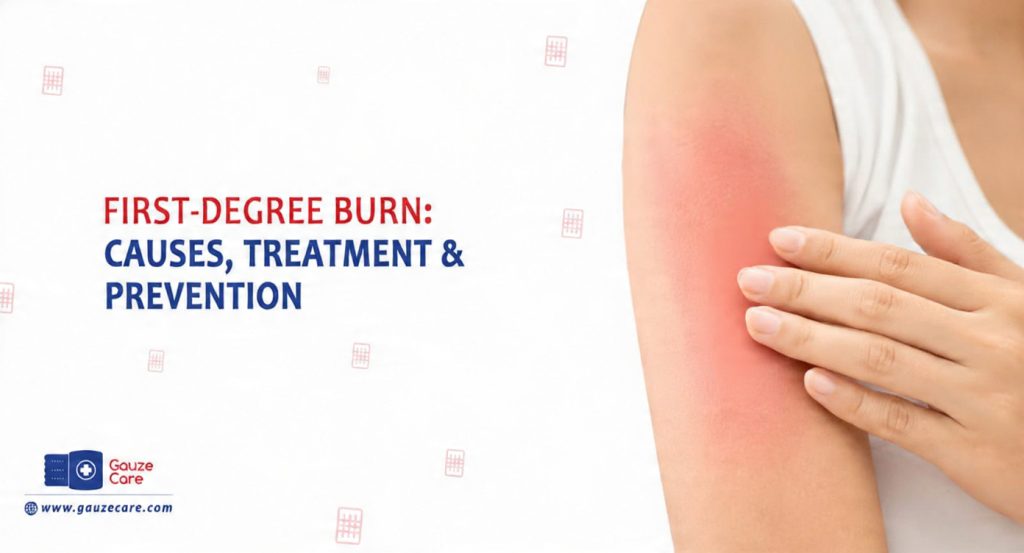
What does a first-degree burn look like
Enables you to evaluate what style of doctor you’ll need the most as fast, because you update your skin. Familiarity with first-degree burn signs and symptoms allows you to use relevant home treatment measures without adding escalation of the complications.
First-degree burn signs and symptoms
Classic symptoms are bright red, warm, a little swollen, and tender. There aren’t any pockets of fluid-filled material, and afterwards a few days, the outer layer of the skin peels off in order to leave it dry.
The difference between first, second, and third-degree burns
Superficial injuries leave only dry redness and are classified as first-degree burns. Second-degree burns are identified by ruptured and painful dermal blisters. All layers are destroyed by third-degree burns, and skin exposure gives a charring appearance to the individual. A third-degree burn is painless at first.
First-degree burn treatment
First aid within minutes is essential to prevent the heat from penetrating more deeply into your skin tissue. Excessive cooling of the site for first-degree burns treatment of minor and assuring pain best immediate use of protected methods.
With unexpected wrap contact, first-degree burns can be held under cold water. for 10 to 20 minutes. This almost instant first step is the foundation you would want in place before proceeding to put on any creams as part of any effective recovery plan
How to heal a first-degree burn
The post on how to apply first-degree burn treatment consists of keeping the burned part neat and hydrated. When ibuprofen or acetaminophen is taken as an over–the-counter pain reliever, residual throbbing and local inflammation are reduced for the first several days after a fall.
What to put on a first-degree burn
The first-degree burn healing methods include either straight pure aloe vera gel, low-dose lidocaine, or mild moisturizers, in the event you are wondering the way to heal a first-degree burn. Avoid using the application of thick oils, butter, and toothpaste, which cause heat and can promote the growth of bacteria, as they are dangerous and have such side effects.
Choosing the Right Burn Wound Dressing
A new skin wound heals more quickly when protected from friction. Choosing the right types of burn wound dressing protects the delicate epidermis from irritating clothes and environmental grime.
types of burn wound dressing
Depending on the size of the wound, there are different options available. Dry burn wound dressings of non-stick sterile pads or hydrogel sheets confer a fast cooling response for superficial injuries.
First-degree burn dressing
To put on an outer layer dressing, you must do it without it touching, and thereby compressing this very delicate skin in a completely relaxed way. Care providers must NEVER place sterile cotton balls as their fibers will cling to the wound.
Stages of first-degree burn healing
The human body, being a biological machine, works through systematic cellular cycles; usually, the epidermal-related damage can be repaired. Checking the stage of healing of your first-degree burn to be able to assure that your skin is healing without any complications.
How long do first-degree burns take to heal
The stages of first-degree burn healing are of interest to those dealing with burn home care. The healing is generally completed within 7 to 14 days, when the damaged skin falls off.
How to prevent first-degree burns from scarring
People often worry- do first-degree burns leave scars? Generally, no, these rarely leave any permanent marks; just maintain good hydration with emollients and use sunscreen every day to keep the skin protected, now that the tissue has regenerated.
Conclusion
The key to the appropriate treatment of a simple first-degree burn is rapid action and cleanliness. This type of injury appears to cause pain for a short time, but heals without any problems in 1–2 weeks simply by following the guidelines for home care. Not to mention steer clear from horrible home remedies such as ice or butter, cool water & loose gauze perfection. Keep watching the site for symptoms of an infection; however, a doctor should be consulted if the injury crosses a major joint or is larger than three inches.
Frequently Asked Questions
How long do first-degree burns take to heal?
Generally, superficial burns heal in the range of 7–14 days. The time required for healing is dependent upon the immediacy of immersion in water and the provision of the required hydration of the skin.
What to put on a first-degree burn?
To keep skin moist, neat aloe vera gel or a commercial antibiotic ointment can be used. Do not use home-made clothes, paste, butter, or oil in it as this will maintain heat in the vehicle.’
Do first-degree burns leave scars?
Usually not. A regular, simple superficial burn does not leave scars because only the very outer layer of the skin is burned. There might be some redness or change in pigmentation that fades away completely over a period of a few weeks.